
Bone inlay furniture is a handcrafted form of decorative furniture in which small, carefully shaped pieces of bone are embedded into a wooden surface to create detailed patterns. This technique combines traditional craftsmanship with intricate design work, resulting in furniture that functions both as a practical object and as a form of surface art.
The process involves placing individually cut bone fragments into carved sections of a base structure, followed by filling the surrounding areas with colored resin. Once the surface is leveled and polished, the design appears seamless, creating a distinct contrast between the inlay and the background.
Because each element is placed by hand, every piece of bone inlay furniture carries slight variations. These differences are a natural outcome of the manual process and contribute to the individuality of each item.

The History and Origin of Bone Inlay Craft
The art of inlaid furniture, often referred to as intarsia, has existed for centuries across different regions including Asia, Africa, and Europe. Over time, it developed into a refined decorative technique used in furniture making.
In India, bone inlay craftsmanship is closely associated with regions such as Rajasthan, where artisans have practiced this technique for generations. Historically, inlay work was often used in decorative objects and furniture for royal households and affluent families, symbolizing attention to detail and artistic skill.
While the popularity of bone inlay has fluctuated over time, it has seen a strong resurgence in modern interiors. Today, it is valued not for status alone, but for the craftsmanship and design depth it brings into contemporary spaces.
How Bone Inlay Furniture is Made
Creating bone inlay furniture is a detailed and time-intensive process that requires precision and patience. It begins with the construction of a stable base, usually made from solid or engineered wood.
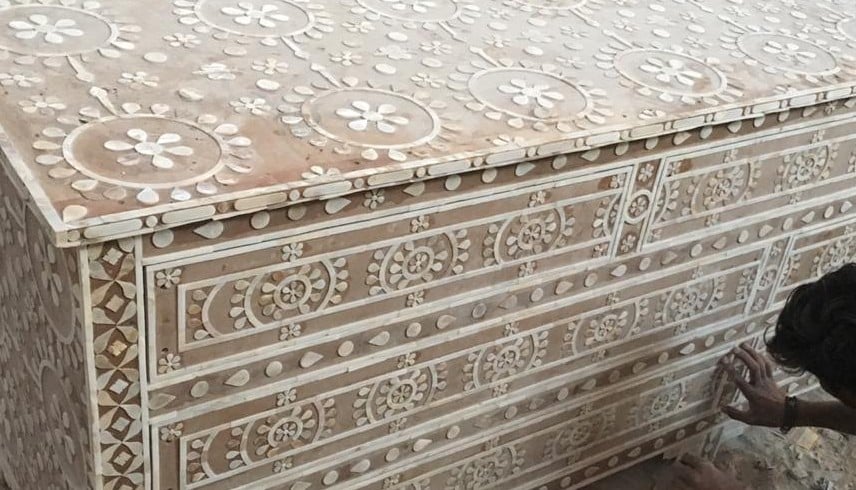
Artisans then hand-carve small pieces of bone, shaping them according to the pattern being created. These pieces are carefully arranged on the surface, one by one, forming intricate designs.
Once the pattern is complete, colored resin is applied to fill the spaces around the bone inlay. This not only secures the pieces but also defines the contrast in the design. The surface is then sanded repeatedly to achieve a smooth finish, followed by polishing to enhance clarity and depth.
Depending on the complexity of the design, a single piece of furniture may take several days or even weeks to complete.
Materials Used in Bone Inlay Furniture
Bone inlay furniture is made using a combination of materials that together define its structure and appearance.
The base structure is typically crafted from wood, which provides strength and durability. The inlay itself is made from natural bone that is processed and shaped into small decorative pieces. These are then embedded into the surface.
Colored resin is used to fill the surrounding spaces, creating contrast and completing the design. The choice of color can significantly influence the final appearance, ranging from subtle neutral tones to more defined patterns.
In some cases, alternatives such as mother of pearl may also be used, offering a different visual effect with a slightly reflective surface.
Design and Pattern Variations
Bone inlay furniture is known for its wide range of patterns and design styles. These patterns can be broadly categorized based on their structure and visual density.
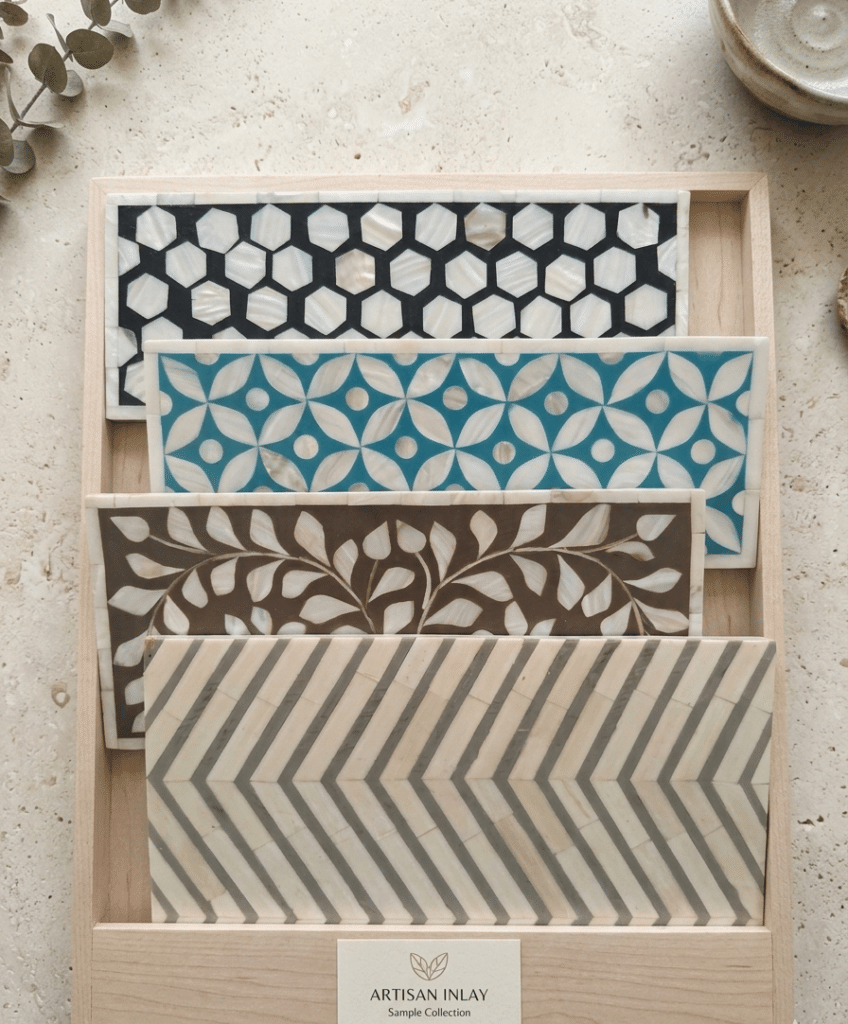
Floral designs are among the most common, featuring repeating motifs that create a continuous decorative surface. Geometric patterns, on the other hand, use structured lines and shapes to form more symmetrical compositions.
Some designs combine both approaches, blending organic and structured elements into a balanced layout.
The spacing and density of the pattern also vary. Certain pieces feature tightly packed designs covering the entire surface, while others use more open patterns for a lighter visual effect.
This flexibility allows bone inlay furniture to adapt to different interior settings, from detailed traditional spaces to more minimal and modern layouts.
Why Bone Inlay Furniture is Unique
Bone inlay furniture stands out primarily because of its handcrafted nature and layered surface design. Unlike printed or machine-made patterns, the inlay technique creates a physical depth within the furniture surface.
Each piece is assembled manually, requiring skill and attention to detail at every stage. This results in designs that are not only visually intricate but also structurally integrated into the surface.
Another factor that contributes to its uniqueness is variation. Even when the same pattern is used, no two pieces are exactly identical. These subtle differences reflect the artisan’s hand and add to the character of the furniture.
Additionally, the combination of materials — wood, bone, and resin — creates a balanced structure that is both decorative and functional.
Durability and Practical Use
Despite its detailed appearance, bone inlay furniture is designed for practical use. The base structure provides stability, while the inlay work is secured within the surface.
The finishing process, which includes sanding and polishing, creates a smooth and durable top layer. This helps protect the design from regular use when handled appropriately.
Bone itself has relatively low moisture absorption compared to untreated wood, which contributes to its longevity. When combined with proper construction and finishing techniques, the furniture maintains its form and surface integrity over time.
With suitable care and placement, bone inlay furniture can remain in good condition for many years.
Where Bone Inlay Furniture is Used
Bone inlay furniture can be used across different areas of a home, depending on the size and function of the piece.
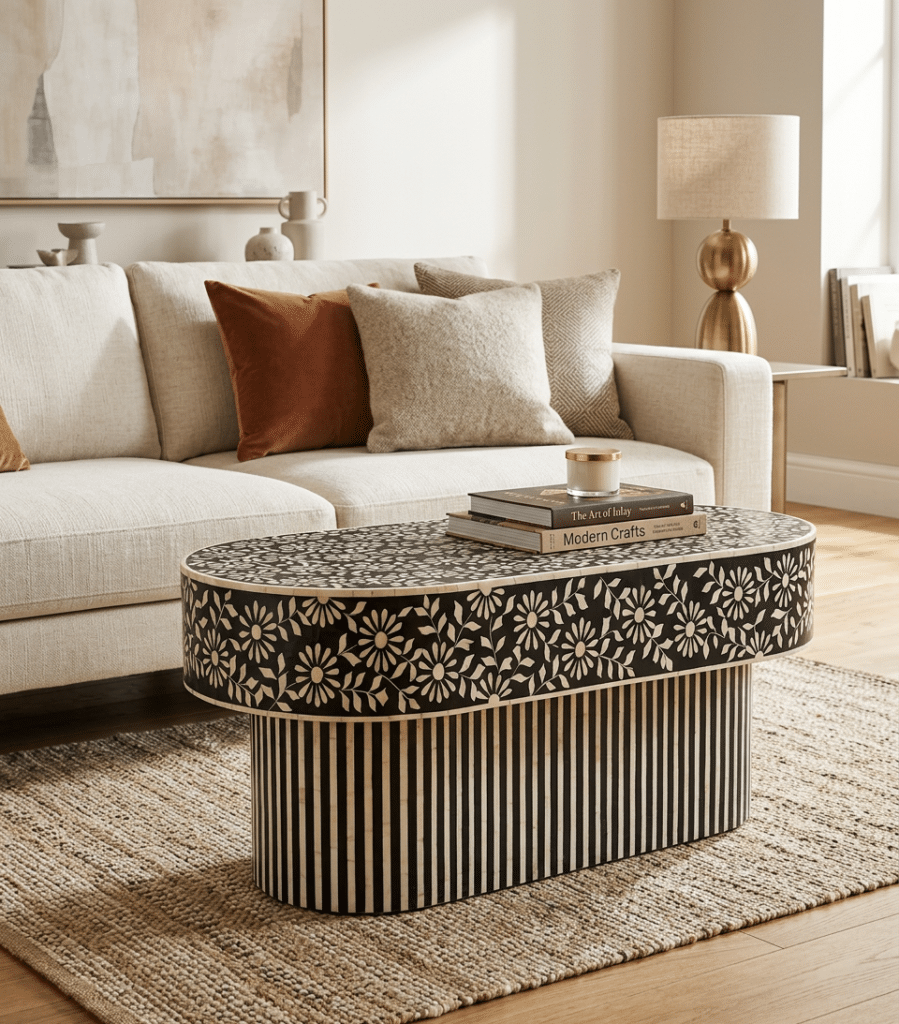
In living spaces, items such as coffee tables, cabinets, and consoles can act as focal points due to their detailed surfaces. In bedrooms, bedside tables and dressers combine storage with decorative value.
Smaller pieces can be placed in entryways or compact areas where they add visual interest without occupying too much space.
The placement of bone inlay furniture is often influenced by lighting and surrounding materials. Proper positioning allows the surface patterns to be clearly visible and enhances the overall effect of the design.
What to Know Before Choosing Bone Inlay Furniture
Before selecting bone inlay furniture, it is important to consider how it will fit within the space and how it will be used.
The scale of the furniture should align with the room layout. Larger pieces work best in open spaces, while smaller items are more suitable for compact areas.
Pattern selection also plays a role. Dense designs create a stronger visual presence, while simpler patterns offer a more subtle effect.
It is also useful to understand the materials used and ensure that the product comes from a reliable source, as variations in quality can affect both appearance and durability.
Conclusion
Bone inlay furniture represents a combination of traditional craftsmanship, detailed design, and functional use. Through a process that involves manual inlay work and layered finishing, each piece achieves a unique visual identity.
Its versatility allows it to be used across different spaces, while its handcrafted nature adds depth and character that cannot be replicated by mass production.
Understanding the process, materials, and design variations helps in making more informed decisions when incorporating bone inlay furniture into a space.


